

Installing solar panels at your school is a great way to save money and energy whilst improving your public image and providing an excellent opportunity for green education. But before you get started, it’s important that you understand how many solar panels you’ll need to make a proper financial impact.
There is no single answer that fits every school, but clear benchmarks allow us to make an accurate estimate. This guide walks through those figures for primary and secondary schools, explains how to calculate the right system size, and covers the role battery storage plays in getting the most out of a solar installation.
What determines how many solar panels a school needs?
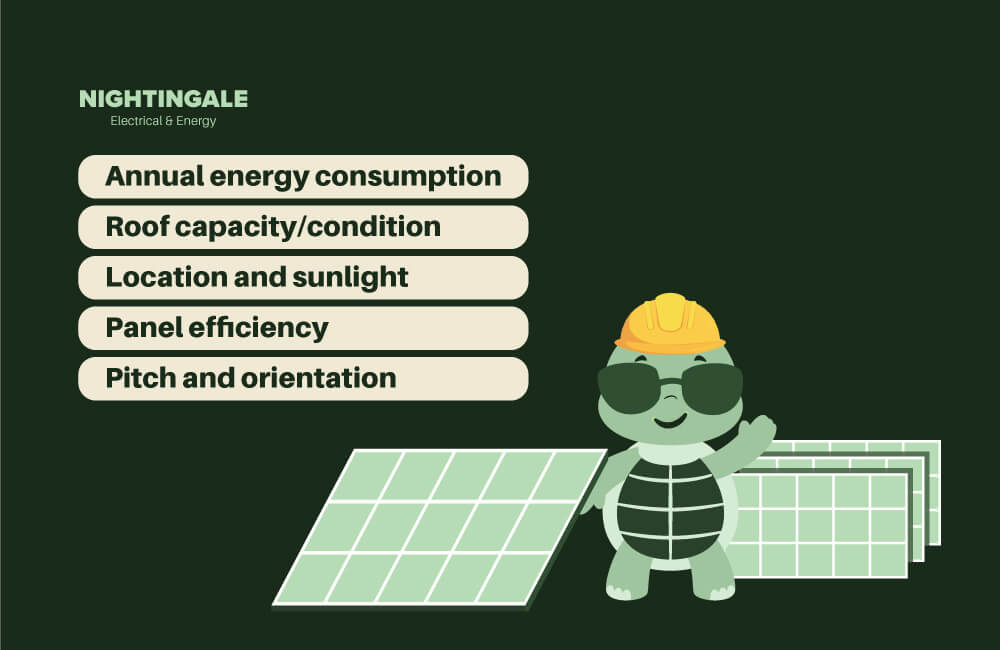
There are a number of variables which determine the number of solar panels your school will need. These include:
Annual energy consumption
Roof capacity/condition
Location and sunlight
Panel efficiency
Pitch and orientation
Another key factor to consider is your own goals and budget. Are you hoping to install a partial system which you will finish further down the line, or is your school hoping to fully offset their energy bills in one go?
Does your school have enough roof space for solar?
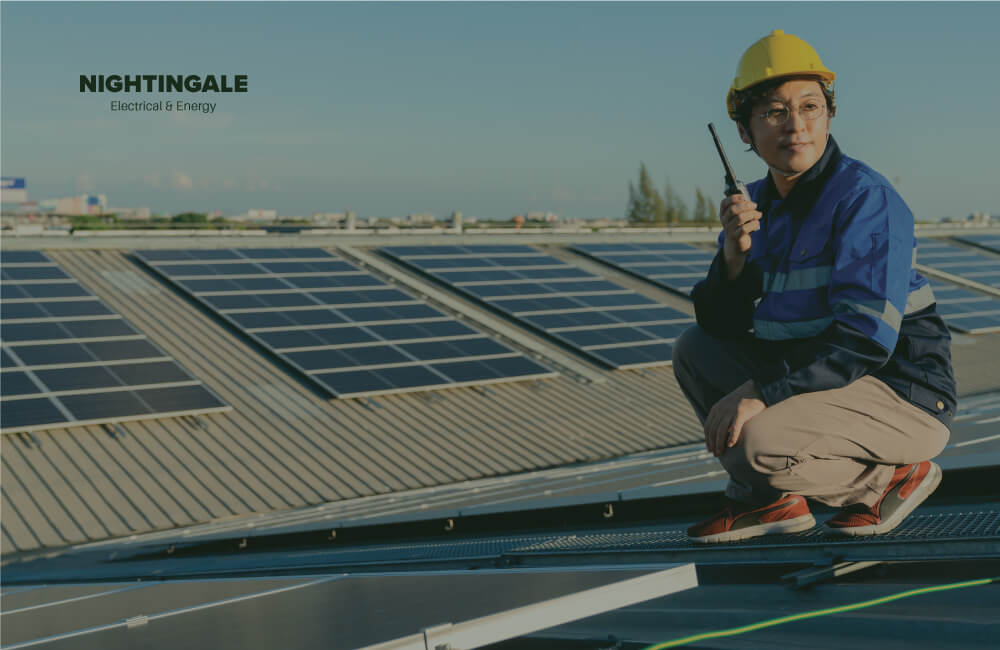
A modern commercial solar panel typically measures around 1.7m x 1.1m and covers approximately 1.9m². However, not all of a school's roof area is deployable, obstructions such as skylights, HVAC units, ridge lines and fire access zones typically reduce usable space to around 60–70% of the total roof area.
South or south-west facing pitches generate the most output, though east-west split installations across flat roofs are also effective. As a rough guide, every 1 kWp of solar capacity requires around 5–7m² of usable roof space.
For schools where roof space is limited, ground-mounted arrays and solar canopies over car parks or playgrounds are practical alternatives. A professional roof survey is the most reliable way to establish what is genuinely achievable
Can solar panels power a whole school?

Solar panels can offset a significant proportion of a school's electricity, typically anywhere from 30% to 60% of annual demand with a well-sized rooftop system.
Fully powering a school from solar alone is rarely achievable from the roof alone, largely because of the mismatch between peak generation (midday in summer) and peak demand (morning and evening in winter), and because roof space tends to limit how large a system can be.
That said, combining solar with battery storage can push self-consumption considerably higher, and some schools with large flat roofs or ground space have achieved systems that cover the majority of their annual electricity use. The right target for your school depends on budget, available space and energy goals.
How many solar panels does a primary school need?
A typical UK primary school uses between 150,000 and 200,000 kWh of electricity per year, depending on the size of the school, the age of the building, and how much technology and lighting is in use.
To offset around 40–50% of that demand, a primary school would typically need a solar PV system in the range of 30–60 kWp. At 400W per panel, which is standard for modern commercial installations, that translates to roughly 75–150 panels.
In practical terms, a 300-pupil primary school with 400m² of usable south-facing roof space could comfortably accommodate a 40–50 kWp system, which is around 100–125 panels. That system would generate approximately 35,000–45,000 kWh per year in the North West of England, enough to meaningfully reduce grid reliance and cut energy bills.
For a detailed look at what that translates to financially, see our guide to the cost of solar for schools.
How many solar panels does a secondary school need?
Secondary schools are significantly larger energy users. Annual electricity consumption typically ranges from 400,000 to 600,000 kWh per year, driven by larger IT suites, science labs, catering facilities, sports halls and longer operating hours.
A system sized to offset 40–50% of that demand would typically need to be in the range of 100–250 kWp. This is equivalent to approximately 250–625 panels at 400W each. Large academies and multi-building sites, particularly those with sixth forms or residential facilities, may require even larger systems or multiple arrays spread across different roofs.
Secondary schools with limited roof space may also find that ground-mounted systems or solar carports are worth exploring. Solar panels for colleges and academies follow a similar sizing logic, worth considering if your school is a larger institution.
Calculating the right solar system size for your school
For a school solar panel system, our sizing calculation follows four straightforward steps:
- Find your school's annual kWh consumption from energy bills or your smart meter data.
- Decide what percentage of that you want to offset with solar. 40% is a common starting target.
- Divide the target kWh figure by the annual output per kWp in your region. In the North West of England, a typical figure is around 850–950 kWh per kWp per year.
- Divide the resulting kWp figure by the output of each panel (e.g. 0.4 kWp for a 400W panel) to get the number of panels.
For example: a primary school using 180,000 kWh per year, targeting a 40% offset, needs 72,000 kWh from solar. At 900 kWh/kWp/year, that requires an 80 kWp system. At 400W per panel, that is 200 panels. The right number of panels is crucial to reap the benefits of solar for schools.
Do schools need battery storage as well as solar panels?
Schools don’t necessarily need battery storage as well as solar panels, but it significantly increases how much of the solar energy a school actually uses. Without batteries, a school might self-consume only 25–35% of what its panels generate, and the rest is exported to the grid at a low rate. Add battery storage and self-consumption can rise to 60–70% or more.
Get an accurate solar panel assessment for your school
Whilst the figures in this guide are reliable benchmarks to use, you won’t know exactly how many solar panels your school needs, and the amount of money you’ll save in the long run, until you’ve had a professional site assessment.
At Nightingale Energy, we work with primary schools, secondary schools and academies across the North West to design and install bespoke solar PV systems. Our process starts with a free survey, and we can advise on funding options including grants and PPAs to help make installation as affordable as possible.
Get Started with Your Solar Site Assessment
Request a call from one of our experts today and get a quote within the week