

Planning permission is one of the first questions farmers ask when they start looking at solar. The rules are not always consistent, and what applies to one farm may not apply to another.
This guide sets out when you need permission, when you don’t, and what to do if a full application is required.
Do solar panels on agricultural land need planning permission?
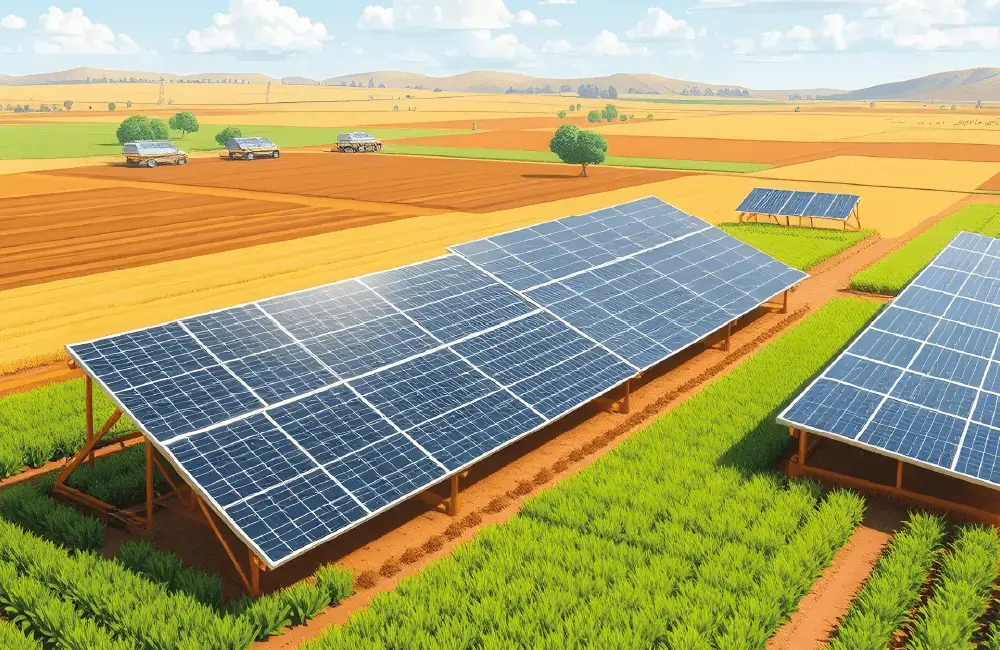
Whether or not solar panels on agricultural land need planning permission depends on the type of system you’re installing and where your farm is located. In many cases, smaller installations on agricultural buildings can be installed under permitted development rights, without the need for a formal planning application.
Ground-mounted systems, particularly larger commercial-scale arrays, almost always require planning permission. Location also plays a major role, with farms in designated areas subject to stricter rules.
When do agricultural solar panels count as permitted development?
Permitted development rights allow certain types of work to go ahead without a planning application. For agricultural solar, whether your project qualifies depends on the scale and type of installation.
Permitted development rules for roof-mounted farm solar
Solar panels fitted to the roofs of existing agricultural buildings can often qualify as permitted development. To meet the conditions, the installation generally needs to stay within certain size limits relative to the roof surface, and the building must not be listed. The panels should not significantly alter the external appearance of the structure beyond what is necessary for the installation.
Roof-mounted solar is typically the simpler route from a planning perspective. It is still worth confirming with your Local Planning Authority (LPA) whether your specific buildings meet the permitted development conditions before work begins.
Permitted development rules for ground-mounted agricultural solar
Permitted development rights for ground-mounted systems are more limited. Smaller systems installed primarily for the farm’s own energy use may qualify in some circumstances, but any installation at a commercial scale will require a full planning application. The total capacity of the system, the area of land it covers, and the purpose of the electricity generated all affect whether permitted development applies.
If you are considering agricultural solar panels at a scale that goes beyond basic farm use, treating planning permission as a likely requirement from the outset will save time later.
When does agricultural solar require full planning permission?
System size and capacity thresholds
Once a system exceeds the thresholds set out under permitted development rights, a full application to your Local Planning Authority is required. For farm solar, this applies to most ground-mounted arrays designed to generate income through export, as well as any installation that does not meet the specific permitted development conditions.
Larger systems may also require a grid connection agreement with your Distribution Network Operator (DNO), which runs alongside the planning process. For significant installations, an Environmental Impact Assessment (EIA) may also be needed before the application can be determined.
Solar panels in National Parks and AONBs
Farms within National Parks, Areas of Outstanding Natural Beauty (AONBs), Conservation Areas, or World Heritage Sites are subject to tighter planning controls.
In these locations, permitted development rights are more restricted and even smaller installations may require a formal application. Planning authorities in these areas assess the visual impact of any installation carefully, and the system design may need to reflect the character of the surrounding landscape.
If your farm sits within a designated area, contact your local planning authority (LPA) before committing to a system design.
How to apply for planning permission for agricultural solar panels
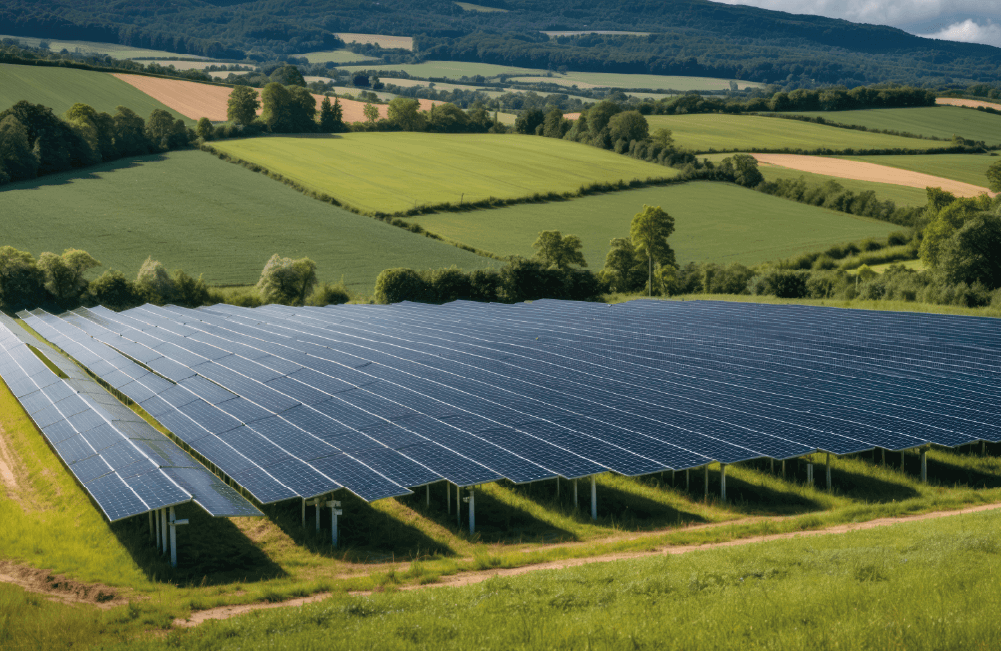
If a full planning application is needed, the process begins with submitting an application to your LPA, which typically includes site plans, technical specifications, and a design and access statement. Some farmers request a pre-application consultation with the LPA first. This is not mandatory, but it can surface any issues early and reduce the risk of delays further down the line.
Standard applications are usually decided within 8 weeks. More complex submissions, including those requiring an Environmental Impact Assessment, take considerably longer. Planning runs alongside grid connection and DNO work rather than replacing it, so both processes can generally be progressed at the same time.
How Nightingale Energy manages your agricultural solar planning application
Nightingale Energy can support with the full agricultural solar installation process, from site assessment and system design through to DNO applications and grant paperwork.
We advise on whether your installation is likely to qualify as permitted development and where a full application is needed.
If you are pairing your system with battery storage, we factor that into the planning and design process from day one.
To find out where your farm stands on planning, get in touch with our team for a no-obligation initial conversation.
Get in Touch For Agricultural Solar Panels
Request a call from one of our experts today and get a quote within the week