

Most school buildings are well-suited to solar panels, but roof type, condition, orientation and planning status all affect how a system is designed and what it can deliver. Understanding these factors before commissioning a survey helps budget holders and governors go into the process with realistic expectations.
This guide covers the key things to check, what to do if your roof presents a challenge, and what to look for when choosing an installer. Visit our dedicated schools page for an overview of solar panel installation for schools, including costs, funding options and what the full process involves.
Is your school roof suitable for solar panels?
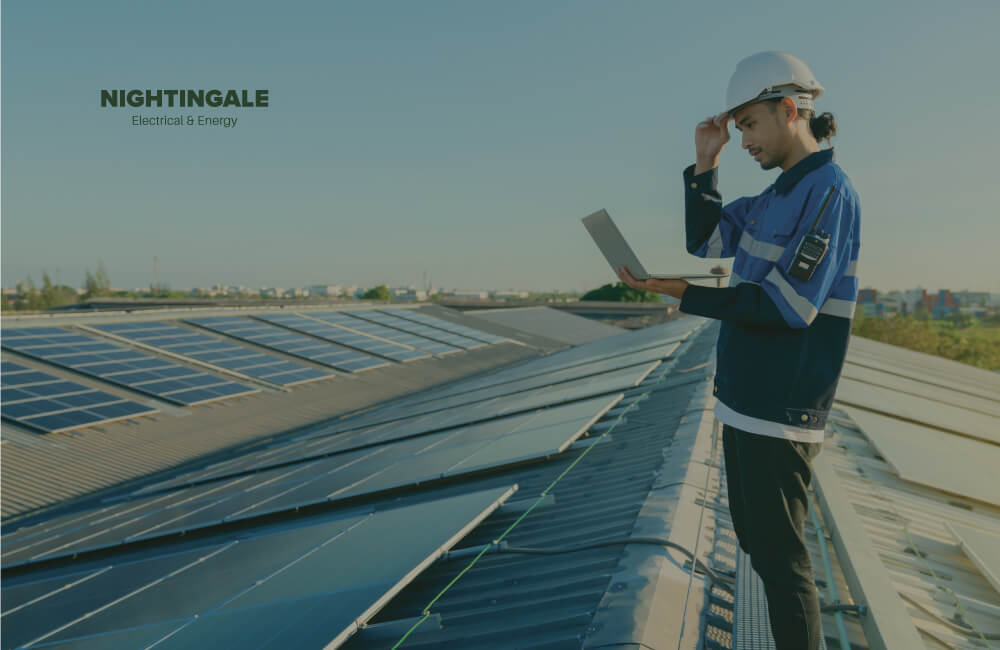
Suitability depends on five factors: orientation, pitch, structural condition, available space and planning constraints. Most school buildings score well on at least three of these, and even where one factor is a challenge, there are usually design solutions that make installation viable.
Roof Type | Solar Suitability | Key Considerations |
Pitched – South | Excellent | Ideal orientation. Standard rail mounting system. |
Pitched – SE/SW | Very good | Minor output reduction (~5–10%) vs south-facing. |
Pitched – East/West | Good | East-west split array works well on larger pitches. |
Flat roof | Very good | Ballasted tilt frames used. No drilling required. Common on school blocks. |
North-facing pitch | Poor | Not recommended as primary array. Ground mount may be a better option. |
Listed/conservation | Case by case | May need planning permission or listed building consent. Achievable with the right installer. |
Even buildings with east-west pitched roofs, large flat areas or partial shading can host effective solar systems. The key is a bespoke design that works around the specific roof rather than a one-size-fits-all approach, which is exactly how Nightingale Energy approaches every school installation.
Can solar panels be installed on a school's flat roof?
Yes, flat roofs are actually among the most practical surfaces for commercial solar installations. Most UK school buildings, particularly those built between the 1960s and 1990s, have large flat roof sections that are well-suited to solar arrays.
Rather than fixing panels directly to the roof membrane, flat roof installations use ballasted tilt-frame mounting systems. These angle the panels at typically 10–15° to capture optimum sunlight without requiring any drilling into the roof surface. This preserves the integrity of the waterproofing and makes the system fully removable if the roof ever needs to be replaced.
Flat roofs often offer more deployable space than pitched roofs because there are no constraints around ridge lines, valleys or slopes. For schools with large single-storey buildings or classroom blocks, this can make it straightforward to accommodate a sizeable system.
A structural survey is required to confirm the roof can support the additional load (see the section below).
If you want to understand how roof space translates into system size, our guide to how many solar panels a school needs walks through the calculation in detail.
Does a school roof need a structural survey before installation?
Yes. Commercial solar panels weigh roughly 20–25kg each, and the mounting hardware adds further load. A structural survey confirms the roof can safely support the system across its 25-plus year lifespan, including under wind and snow loading. This is a requirement under UK building regulations and is a standard part of any reputable commercial solar installation.
At Nightingale Energy, the structural assessment is arranged as part of our standard process, it is not something the school needs to organise independently. The full process, from survey through to commissioning, typically takes 8 to 16 weeks.
For a detailed breakdown of each stage, see our guide to how long solar panel installation takes in schools.
What condition does the roof need to be in for solar?
If your roof is nearing the end of its service life or has existing leak issues, these should be addressed before panels are installed. Retrofitting a roof under an existing solar system is significantly more expensive and disruptive than tackling it beforehand.
Installers check roof condition during the initial site visit, and if remedial work is needed first, this should be factored into the project timeline and budget. For flat roofs, most modern single-ply membrane surfaces are fully compatible with ballasted solar systems.
Nightingale's maintenance and servicing packages also cover ongoing condition monitoring once the system is live, helping schools get the most from their installation throughout its lifespan.
Do schools need planning permission for solar panels?
In most cases, no. The majority of school solar installations in England qualify as permitted development, meaning full planning permission is not required. There are, however, three exceptions worth knowing about.
Schools in conservation areas may have restricted permitted development rights, particularly for installations visible from a public road.
Listed buildings require listed building consent for any changes that affect the character of the structure, in addition to any planning considerations.
Very large systems or ground-mounted arrays may require prior approval or a full planning application depending on size and location.
A good installer will confirm planning status at the very beginning of the project and handle any necessary applications on the school's behalf.
Can solar panels be installed on a listed school building?
In many cases, solar panels can be installed on a listed school building. However, it requires listed building consent and careful design. Modern low-profile solar panels can often be positioned to minimise visual impact, which strengthens the case for consent being granted.
For listed school buildings where roof-mounted panels are not feasible, ground-mounted arrays or solar carports are worth exploring as alternatives, since they avoid making any changes to the listed structure itself.
What if your school doesn't have enough roof space?

Limited roof space does not necessarily mean solar is off the table. There are three practical alternatives. Ground-mounted arrays on school fields or unused land can be sized independently of what the roof can accommodate.
Solar carports over car parks or playground areas make dual use of space and can generate meaningful output without touching the building.
A partial roof installation (even a smaller system than the school's full demand would require) still delivers real savings and can be expanded later as budget allows.
See our guide to how many solar panels a school needs for a breakdown of typical system sizes and what they cost, and our funding guide for information on grants and finance options that can make installation more affordable.
Get a free roof assessment for your school
At Nightingale Energy, we carry out free roof assessments for schools with no obligation to proceed. We'll assess your roof, confirm planning status, and provide a bespoke system recommendation based on your building and energy data.
Book a Free Roof Assessment
Request a call from one of our experts today and get a quote within the week