

Yes, you can put solar panels on agricultural land in the UK. Both roof-mounted systems on farm buildings and ground-mounted arrays on open land are permitted, but the rules around each are different.
Whether your project is straightforward or requires a full planning application depends on the scale of the installation, the quality of the land, and where your farm is located.
Are solar panels allowed on agricultural land in the UK?
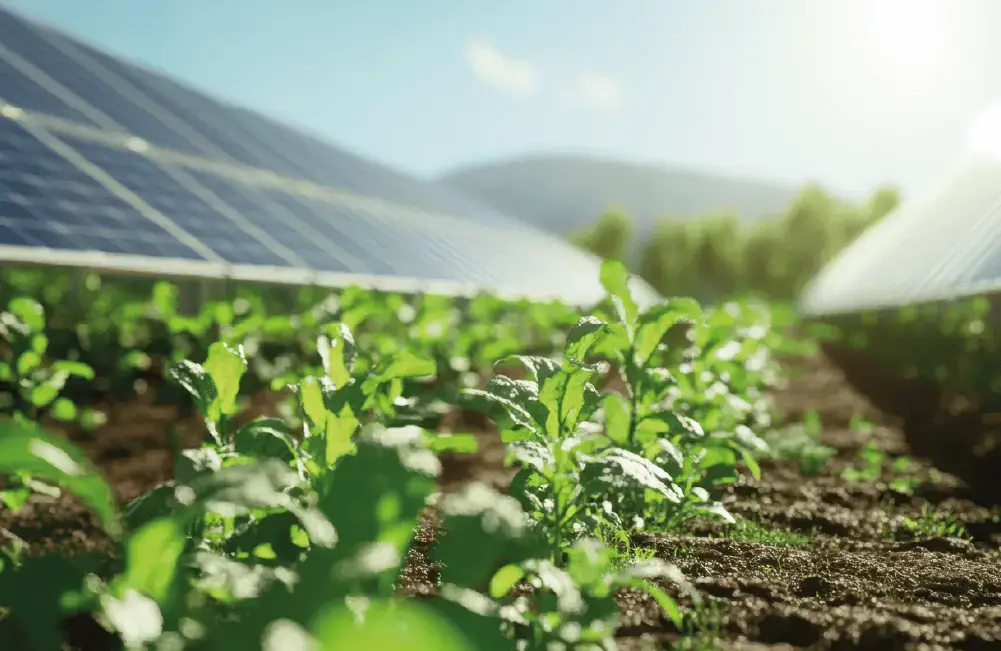
Solar panels are permitted on agricultural land across the UK. There is no blanket restriction on installing solar on farmland, though the specific rules vary depending on whether you are mounting panels on an existing building or installing a ground-mounted array on open land.
Roof-mounted systems on farm buildings are generally the simpler route from a planning perspective and have no impact on the day-to-day use of your land. Ground-mounted agricultural solar panels require more consideration, particularly where the land involved is high quality or the system is commercial in scale.
What are the planning rules for solar panels on agricultural land?
The planning rules for solar panels on agricultural land depend primarily on the size of the system and the classification of the land. Smaller installations may qualify as permitted development, meaning no formal application is needed. Larger or commercial-scale systems almost always require a full application to your Local Planning Authority.
Permitted development thresholds for ground-mounted agricultural solar
Permitted development rights for ground-mounted solar on agricultural land are more limited than for roof-mounted systems. Smaller systems installed primarily for the farm's own energy use may qualify, but any installation at a commercial scale will require planning permission. The total capacity of the system, the area of land it covers, and the intended use of the electricity generated all affect whether permitted development applies.
If you are installing ground-mounted panels to generate income through export rather than to cover the farm's own consumption, treat planning permission as a requirement from the outset. Agricultural solar planning permission covers the full process, including how to apply and what to expect from the timeline.
Solar panels on Grade 1 and Grade 2 agricultural land
Agricultural land in England is classified into grades from 1 to 5 based on its quality and productive potential. Grades 1, 2, and 3a are classed as Best and Most Versatile (BMV) land. National planning policy generally discourages the use of BMV land for solar installations, as this land is considered the most important for food production.
Installing solar panels on Grade 1 or Grade 2 land is not impossible, but applications face greater scrutiny and are less likely to be approved unless there is a clear justification. Planning authorities will expect applicants to demonstrate that lower-quality land was considered first. Where a project involves BMV land, an Agricultural Land Classification report will typically be required as part of the application.
Ground-mounted solar on Grades 3b, 4, and 5 land is generally viewed more favourably by planning authorities, as the impact on agricultural productivity is considered lower.
Do solar panels on agricultural land affect farming use?
Roof-mounted solar on farm buildings has no impact on the use of your land whatsoever. The panels sit on an existing structure and the land beneath and around it remains fully available for farming.
Ground-mounted arrays do occupy land that would otherwise be available for crops or grazing, though the extent of that impact depends on how the system is designed. Panels are typically mounted on frames that allow some use of the land beneath them, and sheep grazing under and around solar arrays is common on UK farms.
Planning conditions on ground-mounted installations often require that the land is returned to full agricultural use at the end of the system's life, which is typically 25 to 30 years.
For farms where maintaining full land productivity is a priority, roof-mounted systems on barns and other agricultural buildings offer the most practical solution. Our guide to solar panels on agricultural buildings covers which buildings are most suitable and what to check before installation.
What is agrivoltaics and can UK farmers use it?
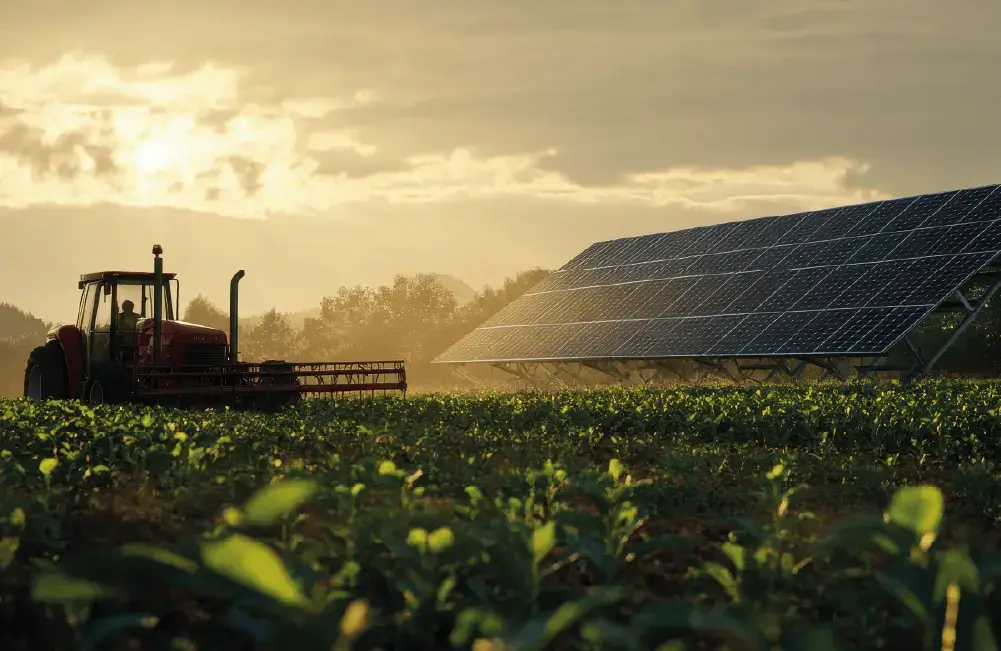
Agrivoltaics is the practice of combining solar energy generation with active agricultural use on the same piece of land. Rather than replacing farming, the solar installation is designed to work alongside it.
In practice, this means mounting panels at a greater height than a standard ground-mounted array, allowing farm machinery to pass beneath them. Crops can be grown between and under the panels, and livestock such as sheep can graze freely across the site. Some agrivoltaic systems are also designed to provide partial shading for heat-sensitive crops, which can improve yields in warmer conditions.
Agrivoltaics is growing in the UK and is increasingly referenced in planning discussions around solar on agricultural land. For farms where ground-mounted solar is under consideration but land productivity is a concern, an agrivoltaic design can address both objectives and may also strengthen a planning application by demonstrating that agricultural use is being preserved.
Pairing an agrivoltaic system with battery storage can further improve the return by storing surplus generation for use when the farm needs it most.
How to apply for planning permission for solar panels on agricultural land
If your ground-mounted installation requires planning permission, the application is submitted to your Local Planning Authority and typically includes site plans, technical specifications, a design and access statement, and an assessment of the impact on the surrounding landscape. For sites involving BMV land, an Agricultural Land Classification report will also be required.
For larger installations, an Environmental Impact Assessment may be needed before the application can be determined. A pre-application consultation with the planning authority is not mandatory but is worth considering for complex sites, as it can identify potential issues before a formal submission is made.
Grid connection with your Distribution Network Operator also needs to be agreed, and this process can run alongside the planning application rather than waiting for it to complete.
Nightingale Energy manages the full planning and grid connection process on your behalf. To discuss your farm's specific situation, get in touch with our team for a no-obligation initial conversation.
Get in Touch For Agricultural Solar Panels
Request a call from one of our experts today and get a quote within the week