

Agricultural buildings offer some of the most practical conditions for solar panel installation. Large roof areas, high energy demands, and rural locations with minimal shading make farms well suited to generating their own electricity.
This guide covers which buildings work best, what to consider structurally, and how to size a system for your needs.
Which agricultural buildings are suitable for solar panels?
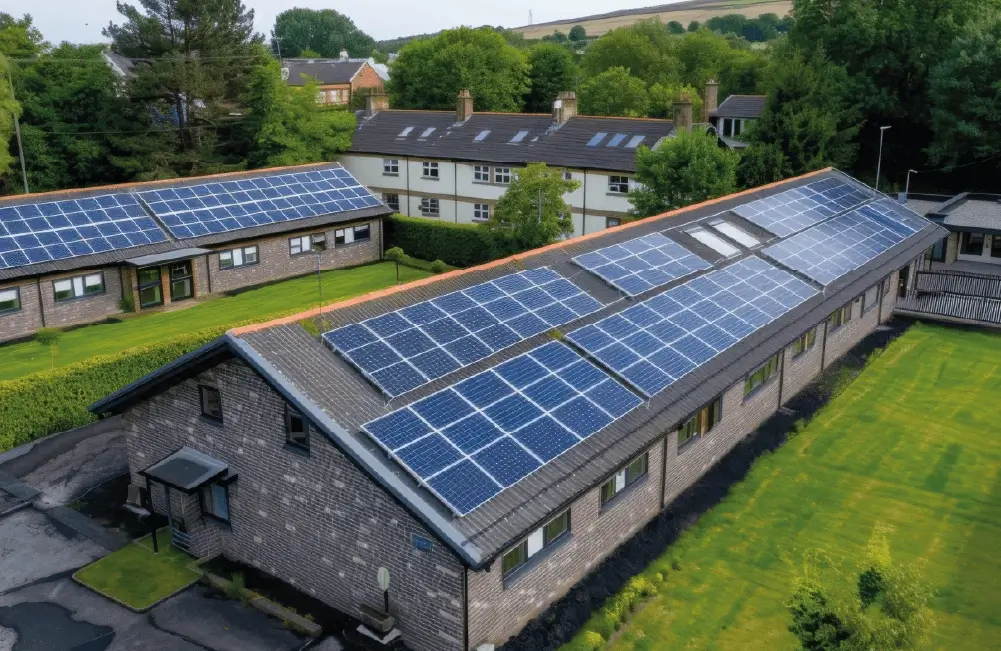
Most agricultural buildings can support solar panels, though some are better suited than others. The key factors are roof size, structural condition, and orientation.
Barns and grain store roofs
Barns and grain stores are typically the most suitable agricultural buildings for solar. Their large, unobstructed roof surfaces can accommodate significant arrays, and their orientation can often be selected during construction.
For existing buildings, a south or south-west facing roof with a pitch between 20 and 40 degrees will produce the best results, though modern panels perform well across a range of pitches and orientations.
Livestock buildings
Cow sheds, pig housing, and poultry buildings can all support solar installations. These buildings tend to have high electricity demands for ventilation, heating, and lighting, which makes on-site generation particularly valuable.
The main consideration is roof condition, as livestock buildings in older agricultural settings may require structural attention before panels are added.
Polytunnels
Polytunnels are a more specialist case. Integrated photovoltaic systems designed for polytunnel use exist, but standard solar panels are not suited to the curved, flexible structure of a typical polytunnel.
If your operation relies heavily on polytunnels, the more practical route is usually to install panels on a nearby permanent structure and draw power from there.
Planning permission for solar panels on agricultural buildings
Roof-mounted solar on agricultural buildings can often be installed under permitted development rights, without the need for a formal planning application, provided the installation meets certain conditions around size and appearance.
Buildings that are listed, or those within designated areas such as National Parks or Areas of Outstanding Natural Beauty, are subject to stricter rules and are more likely to require a full application.
Planning permission for agricultural solar covers the rules in detail, including when permitted development applies and what to do if a full application is required.
Structural considerations before installation
Before any installation, a structural assessment of the building is carried out to confirm it can safely support the additional load. The main factors are:
Roof orientation and pitch
South-facing roofs at a pitch of around 30 to 40 degrees generate the most electricity over the course of a year.
East and west-facing roofs produce less but can still offer a good return, particularly where the building's energy use is spread across the day. North-facing roofs are generally not viable for solar installation.
Load-bearing capacity
Solar panels add weight to a roof structure, typically in the range of 10 to 15 kilograms per square metre.
Most modern agricultural buildings handle this without issue, but older steel-framed or timber-framed structures may require reinforcement. A structural survey will confirm what, if anything, needs to be addressed before installation can proceed.
Shading assessment
Shading from trees, silos, adjacent buildings, or other structures can reduce system output significantly. Even partial shading on a small number of panels can affect the performance of the wider array.
A shading assessment is carried out during the site survey to identify any issues and inform the system design.
How many solar panels does a farm building need?
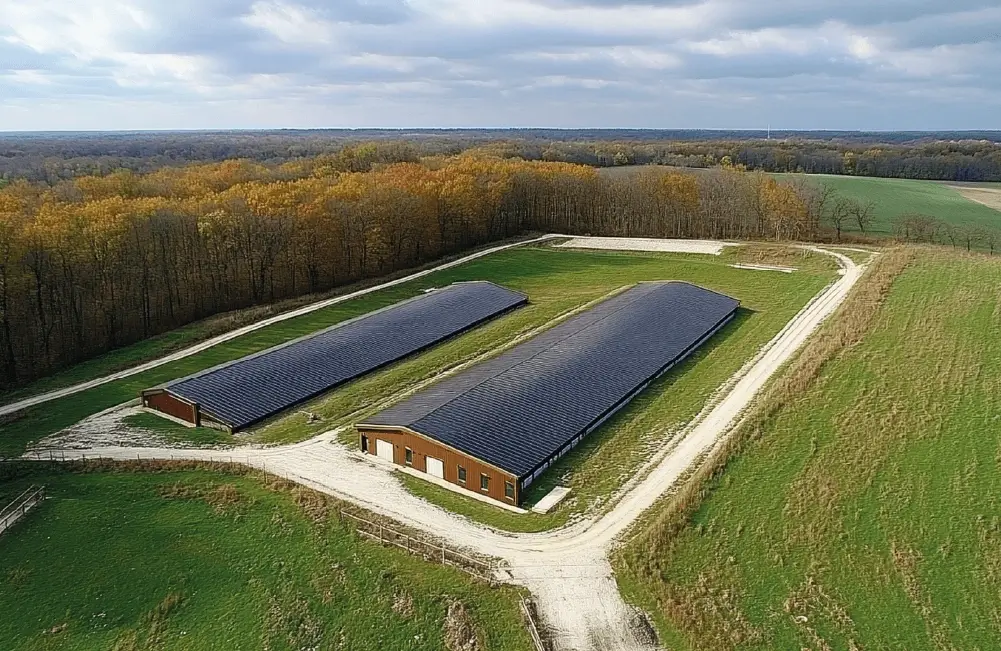
The number of panels required depends on your farm's electricity consumption, the size of the roof available, and how much of your energy use you want to offset. As a starting point, a system is usually sized to match the farm's average daytime consumption, since this is the electricity you would otherwise be buying from the grid.
As a rough guide, a 50kWp system requires around 100 to 125 panels depending on panel wattage, and would suit a medium-sized working farm. Larger operations with significant refrigeration, drying, or milking loads may need systems in the 100 to 250kWp range. The most accurate way to size a system is to work from 12 months of energy bills alongside a site survey.
For a better understanding of what a system this size would cost, our dedicated blog: ‘How Much do Agricultural Solar Panels Cost?’ sets out typical price ranges by farm size.
Combining solar panels on agricultural buildings with battery storage
Pairing your installation with battery storage allows you to retain electricity generated during the day for use in the evening or overnight. For farms where energy use extends beyond daylight hours, this significantly improves the proportion of your total electricity consumption that is covered by the system.
Modern lithium-ion batteries used in agricultural settings are designed for daily charge and discharge cycles and have working lifespans of 10 years or more.
The right battery capacity depends on your evening and overnight energy use, which our team will assess as part of the system design process.
To find out what solar panels on agricultural buildings could offer your farm, get in touch for a site assessment.
Enquire About Agricultural Solar
Request a call from one of our experts today and get a quote within the week