

How big a solar battery you need isn’t a one-size-fits-all answer. It comes down to how much electricity your home uses, how much your solar panels actually generate, and what you want the battery to do for you, whether that’s covering an evening’s electricity use or keeping the lights on during a power cut.
Get the size wrong and you’ll either run out of stored power before bedtime or pay for capacity that sits unused. This guide walks you through how to work out the right size for your home, step by step.
What size solar battery do you need?
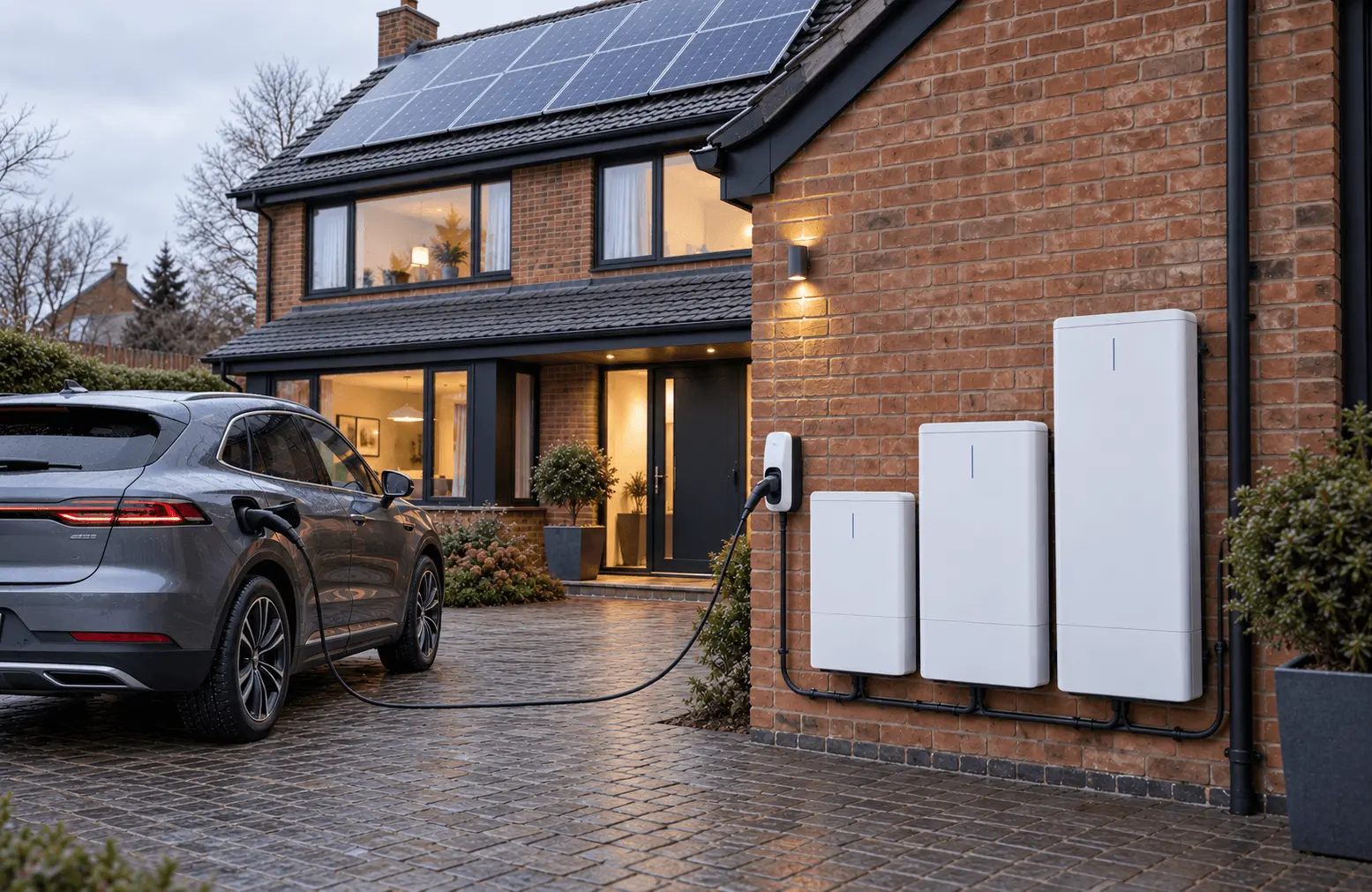
As a starting point, most UK homes fall into one of three brackets:
Smaller or lower-usage homes (1-2 bedrooms): around 5kWh, similar to a Duracell Dura5
Average family homes (3-4 bedrooms): around 10kWh
Larger homes, or those running an EV or heat pump: 13kWh and above, similar to a Duracell Dura16 or Tesla Powerwall 3
These figures are a useful starting point, not a final answer. Your actual usage, your solar panel output, and how much backup cover you want will all move you up or down within these brackets. The rest of this guide covers exactly how.
How to calculate the right battery size for your home
There are three things worth checking before you settle on a battery size.
Check your daily electricity usage
Your energy supplier or smart meter app will show your average daily or annual electricity usage in kWh. UK households typically use somewhere between 2,700 and 4,100 kWh a year, which works out at roughly 8 to 11kWh a day.
Your battery doesn’t need to cover all of that. Your solar panels are already covering a share of your daytime usage directly, so what you’re really sizing for is the gap between what your panels generate during the day and what you use in the evening and overnight.
Match your battery to your solar panel size
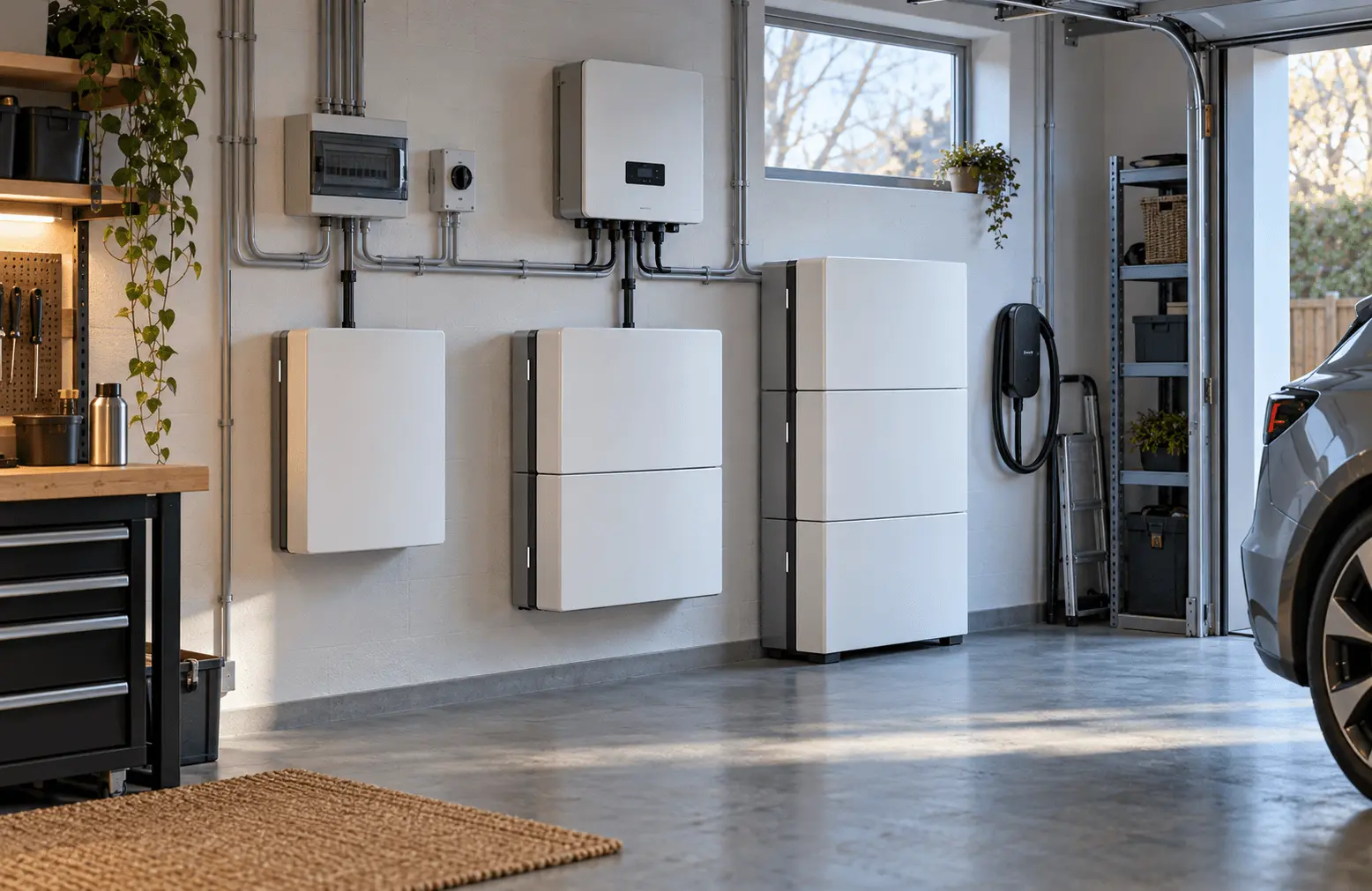
A battery can only store what your panels actually produce. If you pair an oversized battery with a small solar array, it’ll rarely fill up, especially over a UK winter. As a rough guide, a 3-4kWp solar system suits a battery in the 5kWh range, which is why the Duracell Dura5 is such a common retrofit pairing for that panel size.
Larger systems of 5kWp and above can usually support 10kWh or more. If you’re adding a battery to solar panels you already have rather than installing both together, our retrofit guide covers sizing specific to that scenario.
Factor in backup power needs
How much of your home you want to keep running during a power cut changes the size you need. If you only want your fridge, lighting, and a few essential circuits covered, a smaller battery is usually enough.
If you want your whole home, including cooking and heating, to keep running, you’ll need a larger system with the capacity to match. Our Duracell and Tesla Powerwall 3 reviews go through this in more detail against specific models.
What changes the size you need
A few things push you up or down from those starting brackets.
EVs and heat pumps
Charging an electric vehicle at home can add 7kWh or more to your daily usage, and a heat pump can add a similar amount again, particularly in winter.
If either applies to your household, or you’re planning to add one in the next few years, it’s worth sizing up now rather than paying to expand later. A Dura16 or Energy Bank setup, or a Tesla Powerwall 3, is generally a better fit for EV or heat pump households than a smaller 5kWh unit.
Budget and future-proofing
Battery storage installation typically costs between £3,000 and £10,000 depending on size, with smaller 4-5kWh systems around £2,500 to £4,000 and larger 10kWh systems around £7,000 to £9,500.
Modular systems like Duracell’s let you add capacity later, but buying the right size from the outset is almost always cheaper than installing twice. If your household usage is likely to grow, it’s worth building that into your decision now.
Available installation space
Wall-mounted batteries like the Dura5 suit homes with limited space, such as a utility room or garage wall. Larger stacked systems need more room to accommodate multiple modules. Physical space is rarely the deciding factor for most homes, but it’s worth checking before you commit to a size, particularly for flats or homes without a garage.
Common battery sizes compared: 5kWh vs 10kWh vs 13kWh+
Once you know roughly where you sit, it helps to see what each size bracket actually looks like in practice.
Is bigger always better?
Not necessarily. Undersizing means you’ll run out of stored power before your cheaper overnight tariff kicks back in, so you end up buying electricity at peak rates anyway. Oversizing means paying for capacity your home rarely uses, which stretches your payback period without adding much real benefit.
The right size is the smallest battery that reliably covers your evening usage and backup needs, not the largest one you can afford.
Which size suits which household
As a general guide: under 7kWh of evening usage suits a 5kWh battery, 7-12kWh of evening usage suits a 10kWh battery, and above 12kWh, or where whole-home backup matters, points towards 13kWh and above. Budget, available space, and whether you’re retrofitting or installing fresh all play a part too. Our Duracell range review and Tesla Powerwall 3 review break down specific models against these criteria if you want to compare options directly.
If you’d like help working out the right size for your specific home, request a call from one of our experts today and get a quote within the week.
Get in Touch for Battery Installations
Request a call from one of our experts today and get a quote within the week