

Adding a battery to solar panels you already own is one of the most common upgrades we’re asked about. In most cases, the answer is yes, you can do it. The tricky part is how you do it, what it costs, and whether it’s worth the spend for your setup.
This is a UK installers guide to retrofitting solar battery storage: how the two main approaches work, and where a retrofit pays off (or when it doesn’t).
Can you add a battery to existing solar panels?
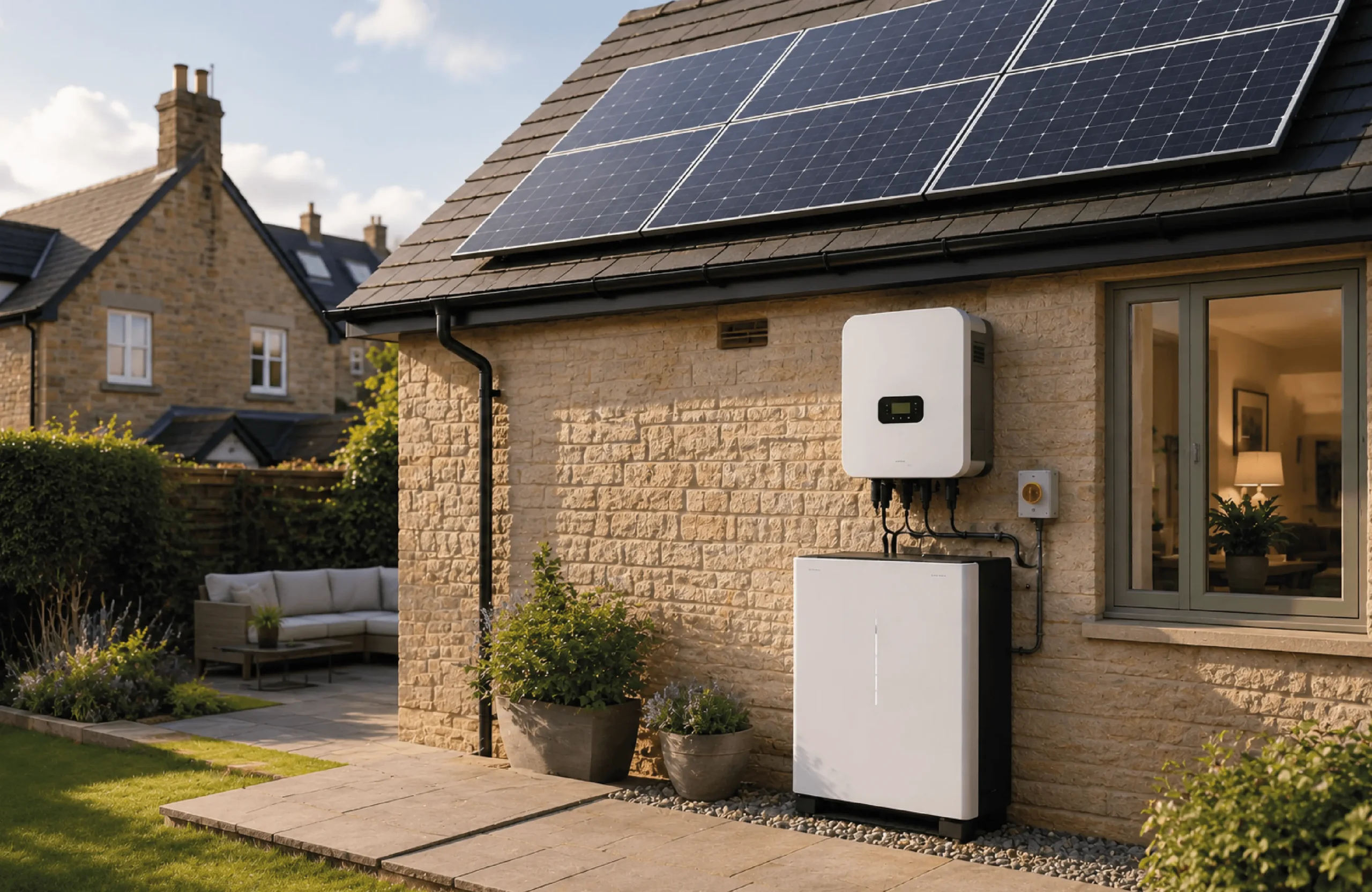
Usually, you can add a battery to existing solar panels. Any grid-tied solar PV system installed in the UK over the past 15 years can accept a retrofit battery, and most systems from before that too. The exceptions are unusual: heavily modified DIY installs, off-grid setups running non-standard voltages, or arrays with damaged inverters that need replacing regardless.
What differs is how the retrofit is done. There are two accepted methods, and the right one for your home depends on the age and type of your existing inverter.
AC-coupled vs DC-coupled retrofits
There are two primary ways to add a battery to an existing solar setup. The right approach for your home depends on the age of your existing kit.
AC coupled retrofit is the simpler approach. The battery has its own inverter built in and sits alongside your existing solar inverter without replacing it. Solar generation still runs through the original inverter as usual, whilst the battery charges and discharges via its own connection to the AC circuit. This is our default recommendation when the existing inverter is still healthy.
DC-coupled retrofit replaces your existing solar inverter with a new hybrid inverter that handles both solar and battery. It's more efficient because the electricity avoids being converted twice, but it's a bigger job and a bigger spend. This route makes sense when your original inverter is nearing end of life, or when you want the highest-efficiency setup possible.
Most UK retrofit jobs we quote are AC-coupled: cheaper, quicker, and no disturbance to the existing solar system.
How much does it cost to retrofit a solar battery in the UK?
A retrofit installation typically falls between £4,000 and £8,500 fully fitted, depending on which route you take and which battery you choose.
- AC-coupled retrofit with a mid-sized battery (around 5 kWh): usually £4,000 to £6,000 installed.
- AC-coupled retrofit with a larger stacked system (10 kWh and above): usually £6,500 to £8,500 installed.
- DC-coupled retrofit with a new hybrid inverter: typically adds £1,000 to £2,000 on top, depending on the inverter chosen.
Other cost variables to keep in mind: the mounting location (a wall-hung indoor install is usually cheaper than an outdoor cabinet), any consumer unit upgrades needed for older wiring, and whether the battery needs to be commissioned with a specific export tariff setup.
Is it worth retrofitting a battery to your existing solar?
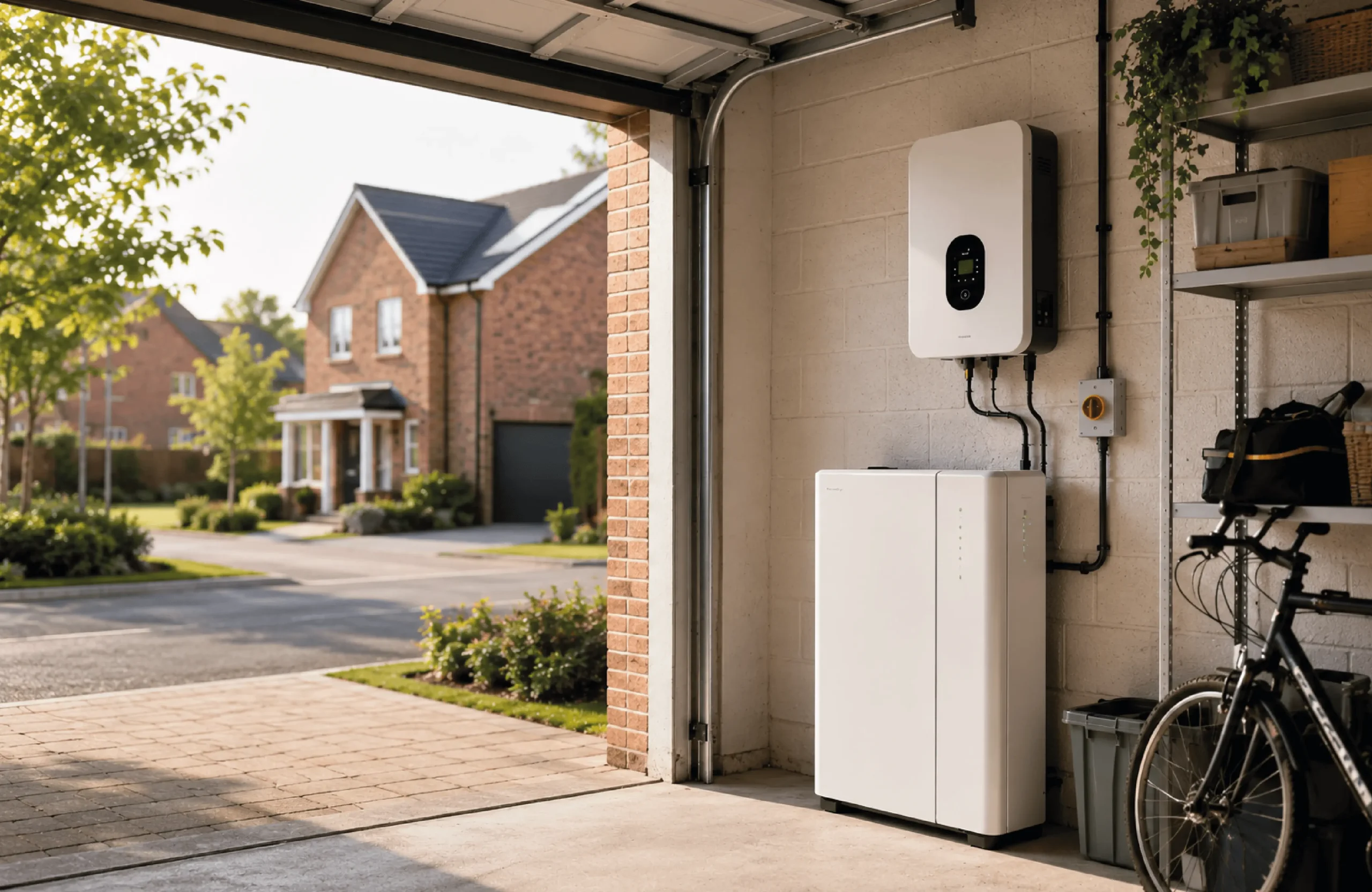
For most UK homeowners with a working solar array, it is worth retrofitting battery storage. Your main savings will come from three places:
Storing daytime solar energy for evening use, so you’re buying less grid electricity at the daytime rate. Charging the battery overnight on a cheap tariff like Octopus Go or Intelligent Octopus, then running the house off stored energy during the peak-price window. Finally, earning better Smart Export Guarantee returns by exporting only when the price is highest.
Typical payback in 2026 pricing is around seven to ten years, depending on your usage and tariff choices. That's slower than the payback on solar itself, but the savings continue for the battery's full working life (usually 10 to 15 years).
Where it isn't worth it: very low daily consumption (under 6 kWh), or homes that are already on a fixed low-cost tariff with no time-of-use variance to exploit. In those cases we'll tell you honestly.
Which batteries work best for retrofits?
The models we recommend and install for retrofits most often are:
Duracell Dura5, Dura16, and Energy Bank. Duracell’s modular home battery range is well-suited to AC-coupled retrofits. Dura5 (around 5.12 kWh) is a common single-module retrofit onto existing 3-4 kWp solar arrays. The Dura16 stacks up to around 16 kWh for larger homes. The Energy Bank adds flexibility when standard configurations don't quite fit. For a closer look at the range, see our Duracell solar battery review.
Tesla Powerwall 3. The Powerwall 3 is a single 13.5 kWh unit with an integrated hybrid inverter, which makes it best-suited to DC-coupled retrofits where you're replacing the existing solar inverter at the same time. If your inverter is due for replacement anyway, it's a clean one-box solution.
Other brands we install (GivEnergy, Fox ESS) can work in the right situation, but Duracell and Tesla cover the majority of retrofit jobs for good reason.
Common solar battery retrofit mistakes to avoid
Four traps we see most often on jobs we’re asked to fix or take over:
- Undersized inverter - An AC coupled battery inverter that can’t keep up with peak household demand ends up drawing from the grid at exactly the times you’re trying to avoid.
- Mismatched hybrid inverters - In a DC coupled retrofit, the hybrid inverter must be compatible with both your existing solar panels and your chosen battery. Compatibility issues can cause slow charging, warranty voids, or system failure.
- Mixed brand installs - Duracell, Tesla, GivEnergy, and Fox each publish approved compatibility lists. Mixing an off-list inverter or battery to save money often costs more later.
- Skipping the consumer unit check - Older houses, such as Victorian/Edwardian terraces, sometimes need a consumer unit upgrade before the retrofit is safe to commission. This is straightforward if it’s discovered during the survey, but expensive if it’s missed.
An MCS-approved installer will catch all four during the site visit. If they don't, that's a warning sign in itself.\
Get a retrofit quote from Nightingale Energy
We handle solar battery retrofits across the North West, covering Bolton, Chorley, Manchester, Wigan, Liverpool, and more. Whether you’re going the AC-coupled or the DC-coupled route, we’ll survey your property, spec the right kit for your setup, and give you a fixed written quote. Get in touch for more information.
Enquire About Solar Battery Retrofits
Request a call from one of our experts today and get a quote within the week